
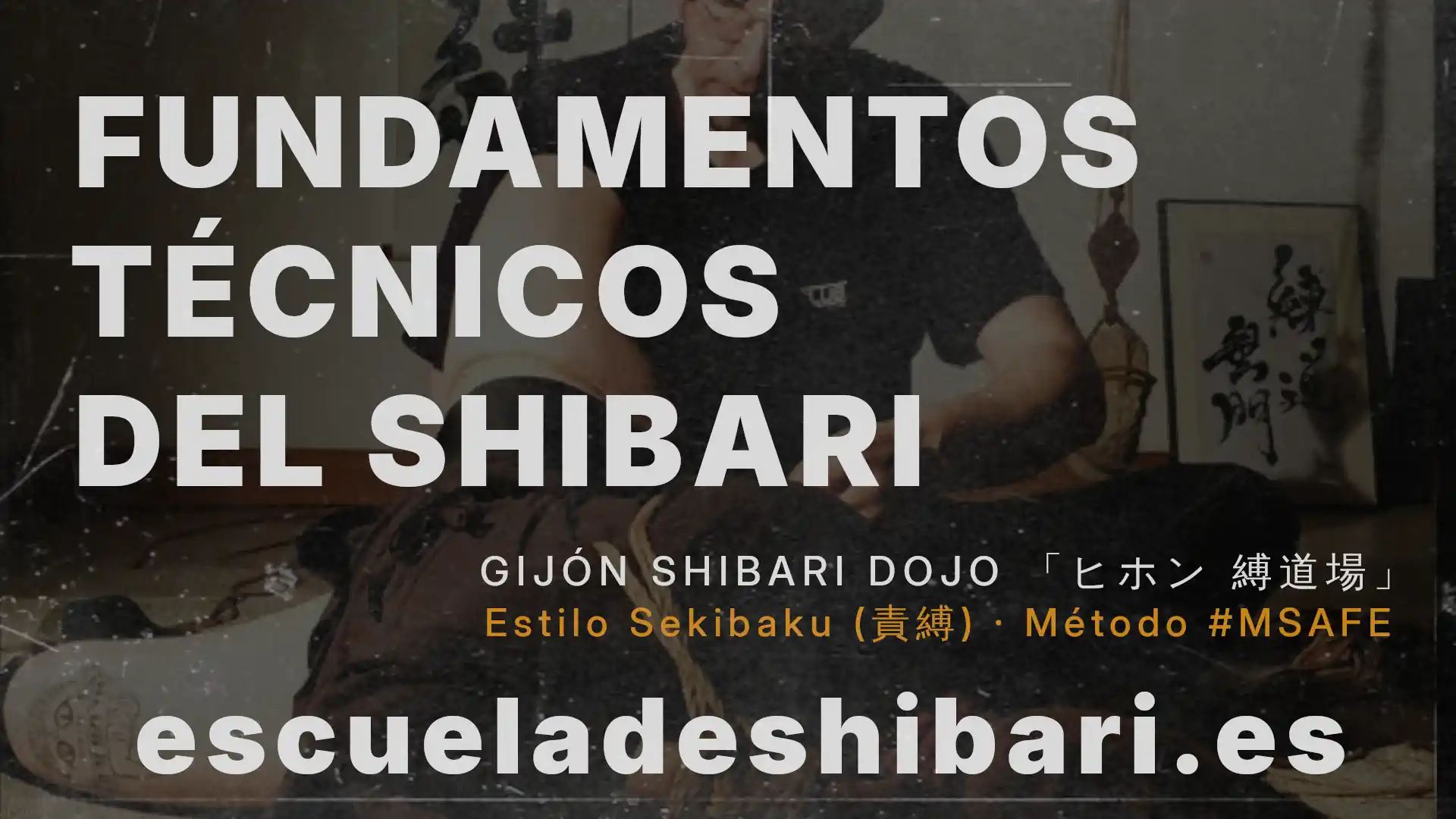
Workshop
This workshop is suitable for all levels: from those approaching shibari for the first time out of curiosity to those with a beginner-level approach who want to explore its foundations from a clearly erotic perspective.
In this particular workshop, most of the physical work falls to the bound partner. They must first learn to understand and listen to their own body, and then communicate that information to the tying partner, who can adapt their technique accordingly.
The tying partner, in turn, will gain tools for identifying subtle changes in the bound partner’s body and behavior. They will also learn how to pace the session and manage it progressively and responsively, along with a fresh and clarifying perspective on the techniques involved in handling and managing the interaction.
Workshop Content
We begin by placing shibari in context: what it is, what its erotic dimension involves, and how the practice can enrich the couple’s interaction and relationship.
From there, we work through three areas:
- Session management — Kyoshogaku (急所学): Understanding and modulating the elements that make up a session.
- Body movement — Taijutsu (體術): Studying posture, balance, tension, and range of motion to understand and optimize the use of the body during a session.
- Rope technique — Nawasuji (縄筋): Becoming familiar with the equipment and the manual processes and skills involved in using it, including fluid rope handling and tension control.
On this foundation, we introduce basic restraint techniques, including knots such as Hon Musubi (本結び) and structures such as Ikue Shibari (幾重縛り). This is particularly useful for those starting from scratch or looking to return to their practice through a logical, structured system.
We teach you how to adapt shibari technique to each person, each body, and each situation. Our approach is personalized and accommodates all levels and degrees of experience.
Continuing Your Training
The study of technical fundamentals cannot be standardized. Everyone has different circumstances, time constraints, and interests, so each couple’s pace of study and progress will be different.
Assimilating the techniques and skills takes time. We recommend spacing classes at least one month—or 45 days—apart, as our methodology is progressive. You cannot move forward effectively until you have developed the techniques and tools covered in the previous class.